
Rockville Local
Commercial Painting Service in Rockville
Interior and exterior commercial coatings applied with proper substrate prep and minimal disruption to your operations.
Request an estimate
Tell us what you need
“The cleaning crew does a great job of keeping our entryway carpet, glass door, stairs and laundry room vacuumed and mopped at all times.”
Commercial Painting for Rockville Facilities
RNM Building Services, LLC. provides commercial painting service in Rockville, MD for offices, managed properties, condominiums, and HOA-maintained buildings throughout Montgomery County. Every project starts with a substrate assessment. We don't apply a single coat until the surface is clean, patched, and primed correctly, because skipped prep is the reason most commercial paint jobs fail within two years. Call (301) 335-1348 to schedule an on-site walkthrough and written scope.
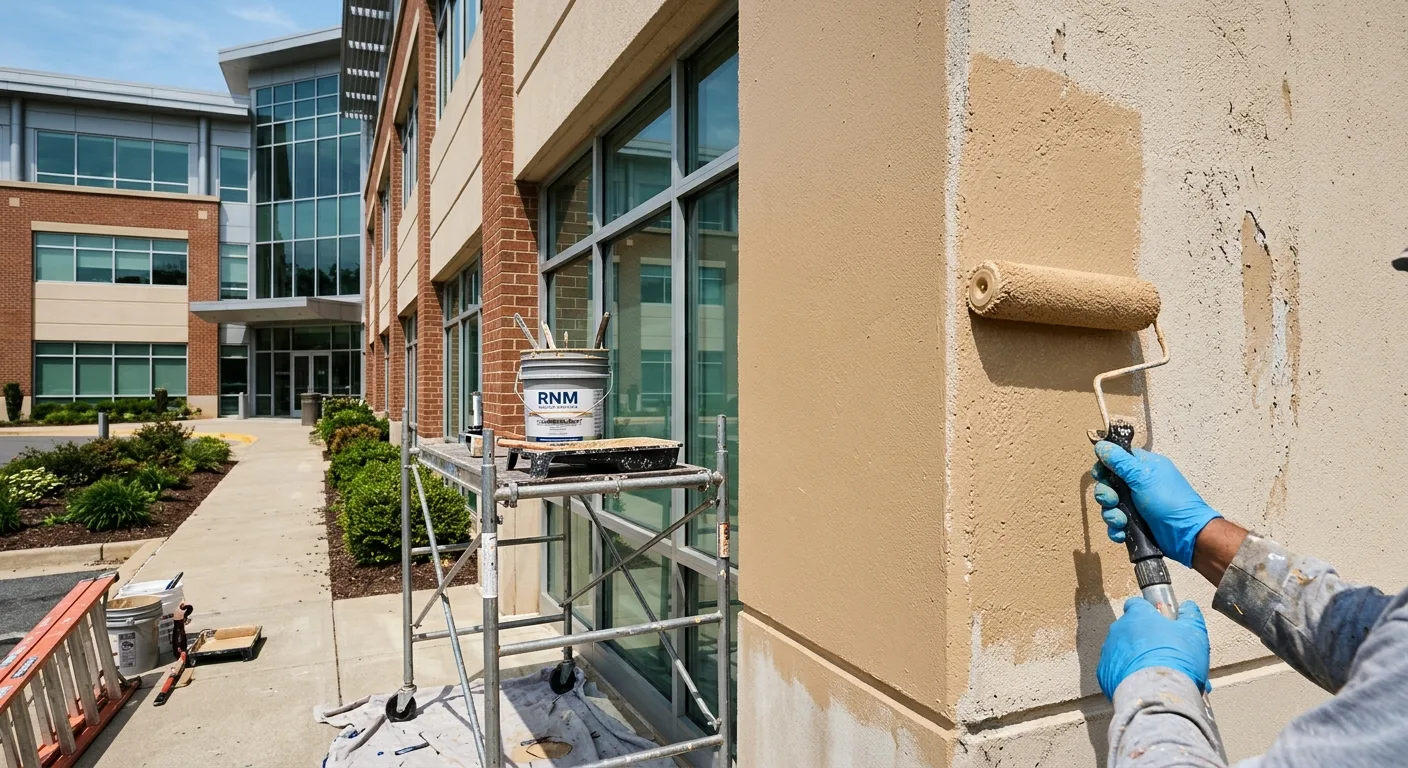
What drives cost on a commercial painting project isn't the paint itself. It's the condition of the substrate, the access complexity, the number of coats required, and whether drywall repair or caulking is needed before the first primer goes on. High-traffic corridors require a higher-sheen, scrubbable coating than a back-office wall. Exterior substrates like stucco, brick, and metal each require specific primers and product systems. Maryland's humid summers affect both drying time and coating adhesion, so exterior scheduling in the DC Metro area requires attention to temperature and moisture windows. We select low-VOC, commercial-grade coatings appropriate to each substrate and occupancy type. Every job is different. Contact RNM Building Services, LLC. for an accurate estimate.
What Commercial Painting Service Covers
- Interior walls, ceilings, doors, and trim in offices, lobbies, and common areas
- Exterior building facades, stucco, brick, metal, and trim surfaces
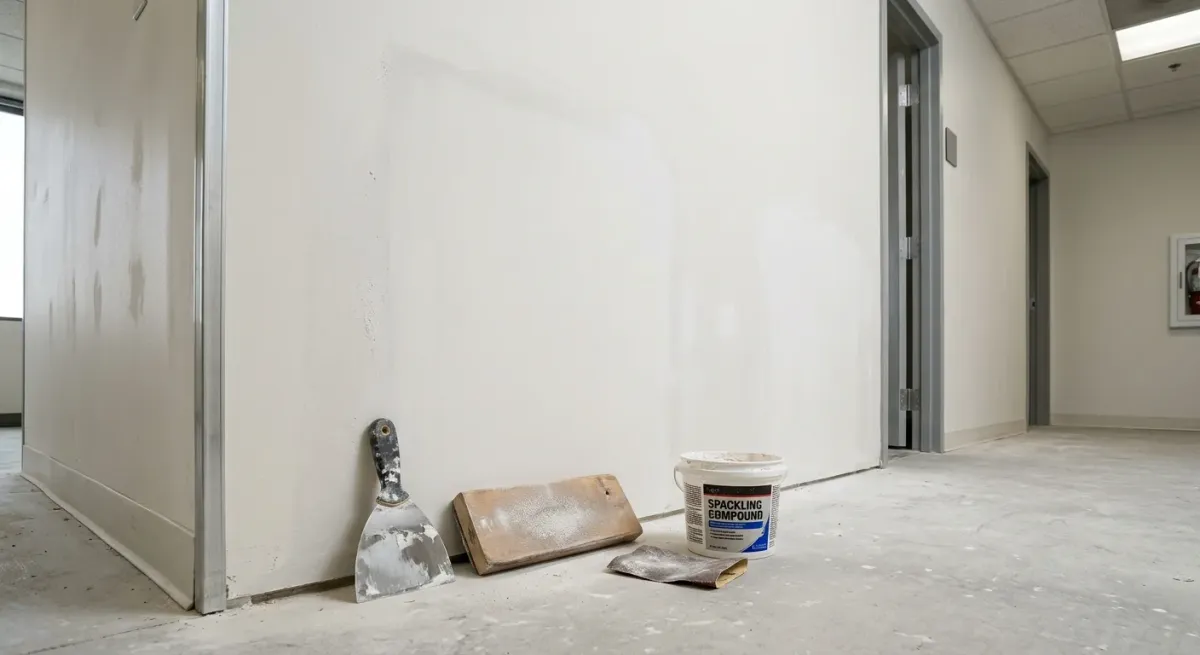
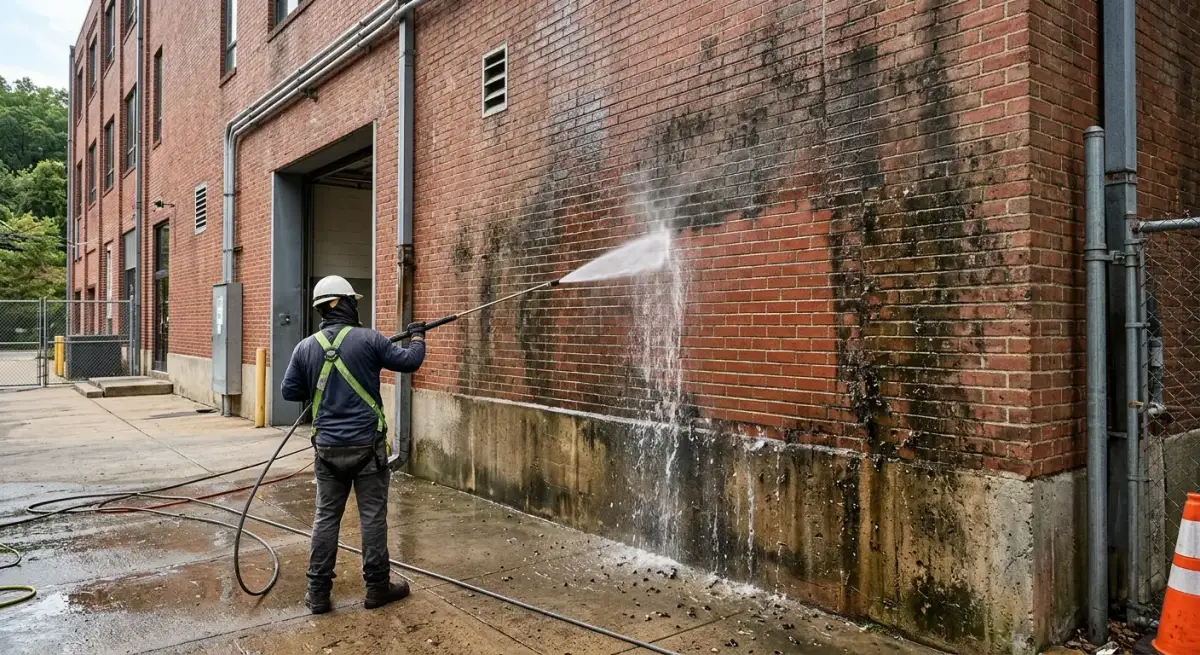
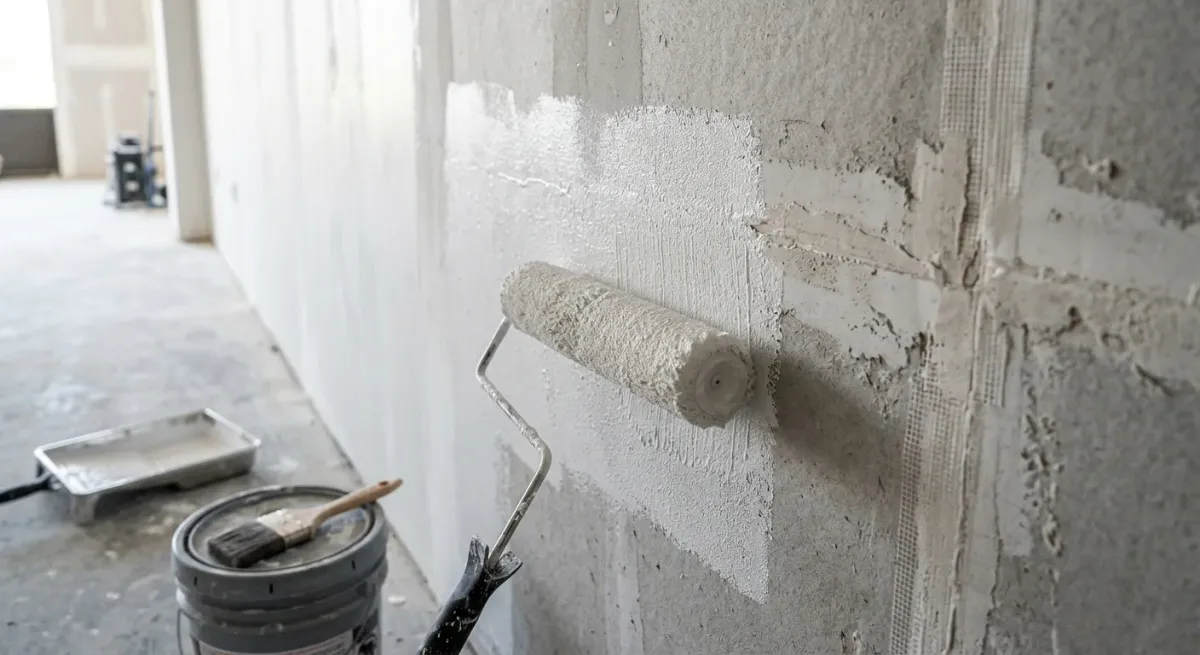
- Surface washing, drywall patching, caulking, and priming before any coating
- Low-VOC commercial-grade coatings selected by substrate and traffic level
- Coordinated scheduling to minimize disruption to tenants and daily operations
PREP WORK
Why Substrate Preparation Determines Paint Longevity
Skipping prep is the single most common reason commercial paint fails prematurely.
Surface Cleaning
Commercial walls accumulate grease, dust, and airborne contaminants that prevent adhesion. We wash surfaces with appropriate commercial cleaners before any prep begins. Applying primer over a contaminated substrate guarantees early failure.
Patching and Drywall Repair
Cracks, fastener pops, and screw holes are filled, feathered, and sanded flush before priming. Our drywall patching and repair work ensures the finished surface reads flat under paint rather than telegraphing every imperfection.
Caulking and Sealing
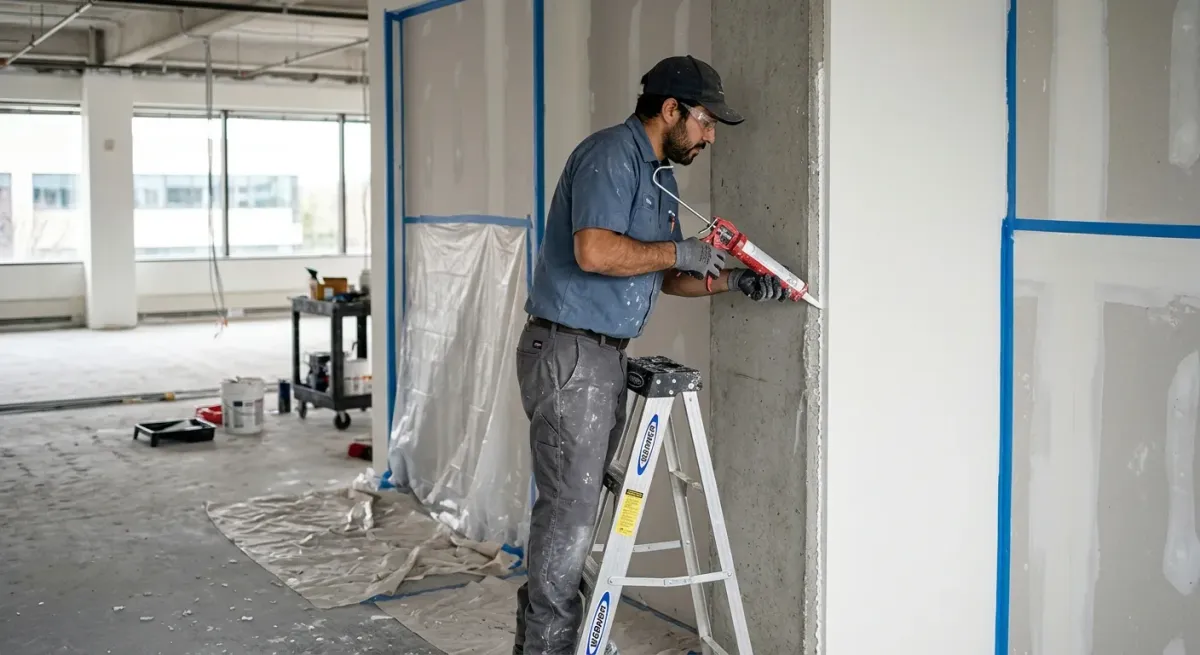
Gaps at baseboards, door frames, and ceiling transitions admit moisture and compromise the painted edge. We caulk and seal all transitions before coating, which also improves the finished line quality significantly.
Priming by Substrate
Drywall, previously painted surfaces, bare wood, metal, and masonry each require a different primer chemistry. Using a universal primer on the wrong substrate is a shortcut, one that shows up as peeling within 18 months.
APPLICATION
Spray, Roll, or Brush: How We Choose the Right Method
Airless spray application delivers a consistent, factory-smooth finish on large flat surfaces like lobby walls, corridor ceilings, and open office areas. It's faster and produces fewer lap marks than rolling on those substrates. That said, spray isn't always appropriate: occupied spaces with active HVAC systems, furniture that can't be fully removed, or surfaces adjacent to sensitive equipment call for roller and brush application where overspray is a real liability.
For commercial facilities in Rockville's office parks and retail corridors, we typically spray ceilings and large open walls during off-hours or weekends, then cut in transitions, door frames, and detail areas by brush. This combination keeps the schedule tight without compromising edge quality. High-traffic baseboards and door frames get a semi-gloss or gloss finish that holds up to daily contact and can be wiped clean, not the same flat or eggshell used on adjacent walls. Matching sheen levels to traffic and function is part of a proper commercial specification, not an optional upgrade.
Painting Paired with Repair and Facility Maintenance
One of the structural advantages RNM Building Services offers property managers is that painting doesn't have to be a separate contract. Our handyman and drywall repair capabilities mean the same team that patches water-damaged drywall in a common area can prime and paint it to match the existing finish, with texture matching where the wall profile requires it. That eliminates the coordination gap between a drywall sub and a paint sub, which is where timelines slip and finishes don't match.
For condo and HOA properties managing multiple buildings, this matters. A single point of contact for repairs, prep, and painting means one written scope, one walkthrough, and one crew accountable for the finished result. If you're coordinating a tenant turnover, a common area refresh, or post-construction touch-ups in Rockville or across Montgomery County, call (301) 335-1348 to schedule a walkthrough with Project Manager James directly.
Exterior Painting in Maryland's Climate: What to Know
Frequently Asked Questions
Do professional painters wash walls before painting?
What do painters do to prep walls before coating?
Can you paint over existing paint without primer?
What causes paint to peel or fail prematurely on commercial surfaces?
How long does paint take to cure in Maryland's climate?
Do you spray or roll commercial interior walls?
How do you match colors accurately across a large commercial space?
Related
Next step
Get a Painting Scope for Your Rockville Property
One walkthrough. One written scope. One crew from prep to final coat.
Rather talk now?(301) 335-1348
★★★★★
The cleaning crew does a great job of keeping our entryway carpet, glass door, stairs and laundry room vacuumed and mopped at all times.